
Surprise, Surprise—DOJ Failed to Turn Over Trump-Related Records
For three months DDF has raised the alarm that DOJ has failed to comply with the obligation to produce documents under the EFTA. As a result of DOJ’s failures, DDF has filed three requests for an audit of the entire process with the Department of Justice’s Office of Inspector General. Among the many issues, DDF has highlighted that it appears that the Department is illegally withholding documents.
Months after DOJ was required to complete its full release of the Epstein files, NPR reported that at least 53 pages were missing from the EFTA. The Justice Department published 18 of those pages which relate to allegations of sexual abuse by Trump. DOJ had conveniently marked these documents as duplicates.
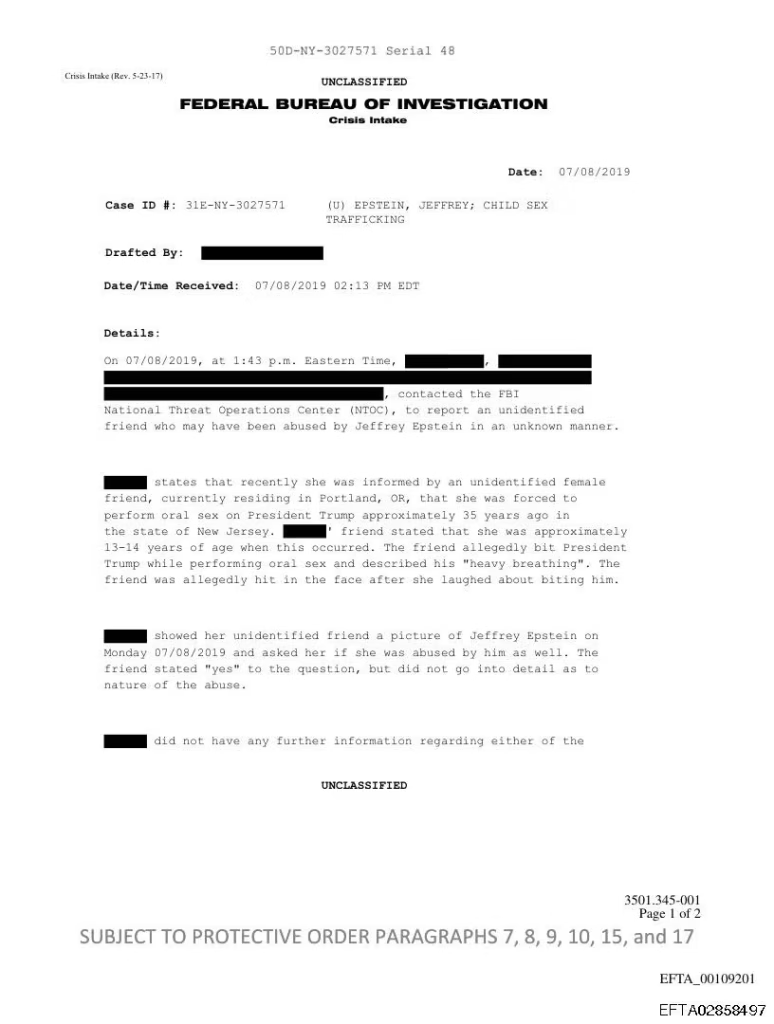
While the documents relate to allegations that DDF previously reported on, they also give more context to the allegations. More importantly, DOJ’s withholding of the interview transcripts raises serious concerns about how DOJ is deciding what to withhold and why.
Epstein Received Special Treatment by His Friends in the Financial Industry–Notwithstanding Their Knowledge of His Horrific Crimes
Although DOJ was required to send a letter to Congress concerning the redactions it made, that letter says nothing about the redaction or withholding of any particular record. The result is that the American public is left guessing why DOJ was withholding these interviews—was this mere incompetency or did someone flag the records for withholding to protect the President?
U.S. anti-money laundering and bank secrecy laws required that banks take steps to avoid abuse of the financial system. Among these requirements are Know Your Customer (“KYC”) rules that are aimed at identifying potential bad actors and preventing financial crimes.
Records in the Epstein files show that Deutsche Bank was aware of serious allegations against Epstein, including his felony conviction, and allegations that over 40 underage girls had alleged abuse by Epstein. As a result, Deutsche Bank categorized the relationship as being a “high risk” (EFTA 00166748) and then a “critical risk” (see, e.g. EFTA 1297650; 1297243; 1296834; 1298320; 1297983; 1298444). Notwithstanding, Deutsche Bank maintained their relationship with Epstein and continued to sign off on deals involving his companies for years after their compliance group determined his court cases had been closed.

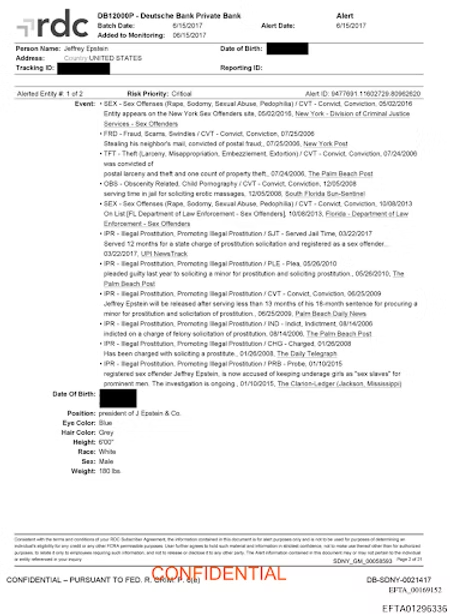

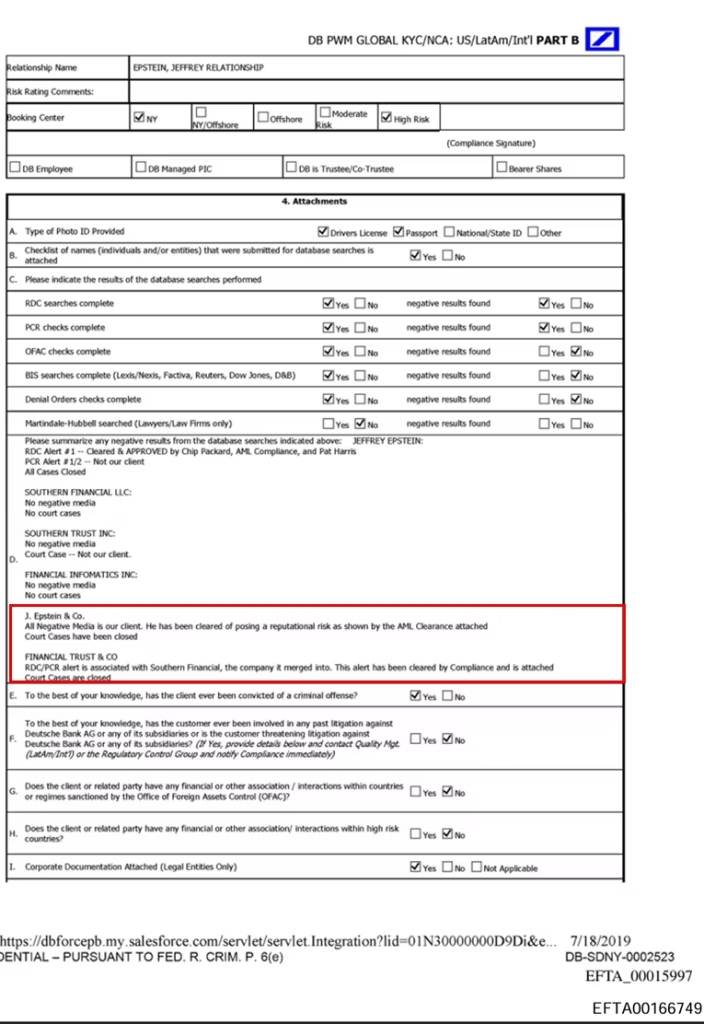
Deutsche Bank continued to rely on their 2013 clearance determination as late as 2018 to explain their continued relationship with Epstein and his entities.
In addition, records in the Epstein files show that Deutsche Bank initially did not to label Epstein a Politically Exposed Person, a classification that requires enhanced due diligence whenever they open a new account, only to flip-flop on that designation years later.
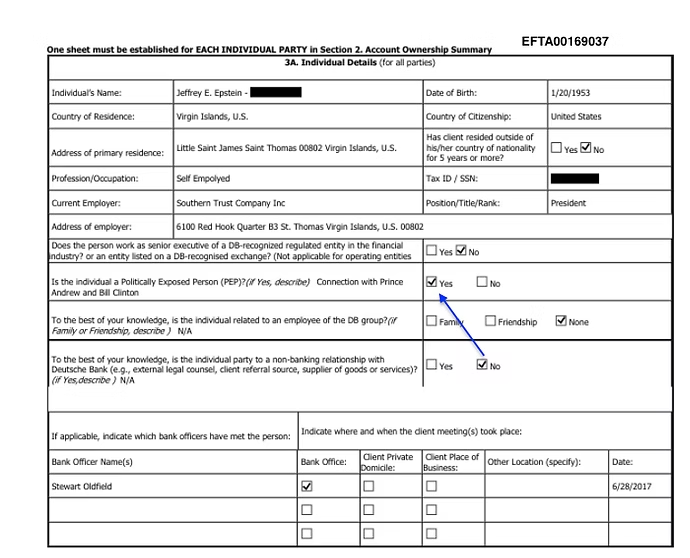
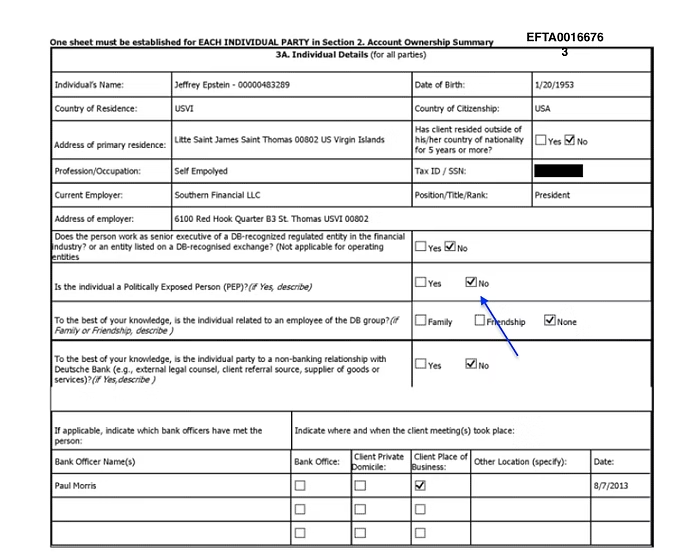
These troubling irregularities are not isolated instances; they appear to define Epstein’ s relationship with Deutsche Bank and others in the financial industry (including Bank of America who this week offered to settle allegations made by Epstein victims that it “knowingly provided the financial support and the veneer of institutional legitimacy” to Epstein). Deutsche Bank would go on to pay $150 million to the New York Department of Financial Services to settle a lawsuit that accused them of “inexcusably fail[ing] to detect or prevent millions of dollars of suspicious transactions,” despite “knowing Mr. Epstein’s terrible criminal history.”
Epstein advised on how a Russian oligarch could avoid US sanctions–and made sure Steve Bannon was up to date on the progress.
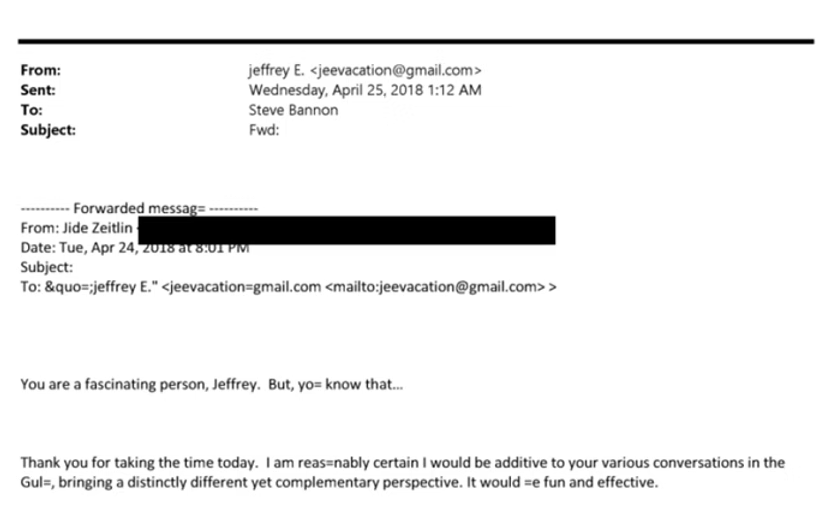
About a month after the government announced sanctions against a Russian oligarch, Oleg Deripaska, Epstein exchanged emails with Jide Zeitlin, a former Goldman Sachs banker and then-Chairman of Tapestry Co., a Fortune 500 firm that owned Kate Spade, Coach, and other lifestyle brands. Zeitlin, who had visited the Trump White House a day earlier, asked Epstein if he knew Deripaska and Ivan Glasenberg (the CEO of Glencore who had resigned his post as a director of Russian aluminum giant Rusal after the US imposed sanctions on the company); the two then agreed on a time to meet.
The Trump Treasury Department placed Russian oligarch Oleg Deripaska on the Office of Foreign Asset Control sanctions list on April 6, 2018, for his ties to the Russian government and his participation in the Russian energy sector. Deripaska, who had a majority stake in the Russian energy giant EN+—which controlled Rusal, among other companies—had close ties to Trump’s former campaign chairman, Paul Manafort, including supporting Manafort’s consulting work in Ukraine and lending one of Manafort’s business $10 million.
Deripaska had also, according to the Treasury Department, been investigated for money laundering, accused of threatening the lives of business rivals, illegally wiretapping a government official, taking part in extortion and racketeering–and he allegedly “bribed a government official, ordered the murder of a businessman, and had links to a Russian organized crime group.”

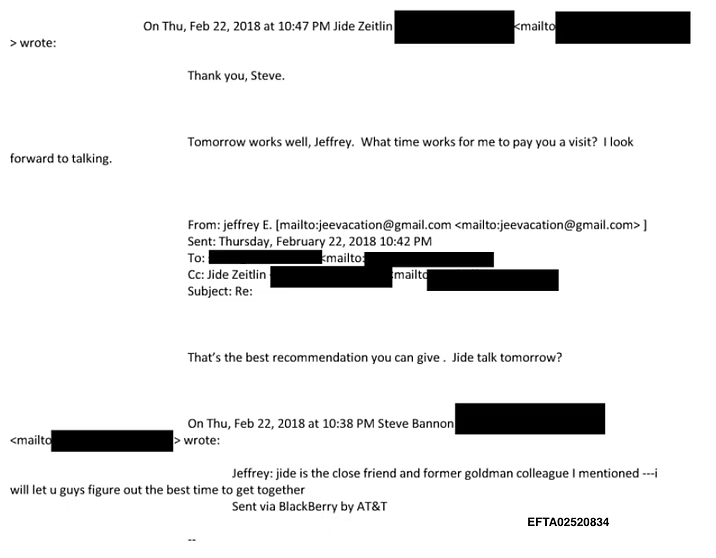
The day after he connected with Epstein, Zeitlin reached out to thank him for his “thoughts on Deripaska”—and shortly after, Epstein and Zeitlin corresponded to discuss how to structure a transaction that would allow someone sanctioned by the Treasury—likely Deripaska—to appear to divest his interest in a company while retaining an option to re-acquire ownership in the future if sanctions were lifted. Epstein appears to have proposed a structure wherein Deripaska would appear to divest his legal ownership but receive a financial instrument in return. Although Epstein seemed to recognize that Treasury approval would be needed, it would not likely alleviate Deripaska of a property interest, which would continue to be subject to sanctions.
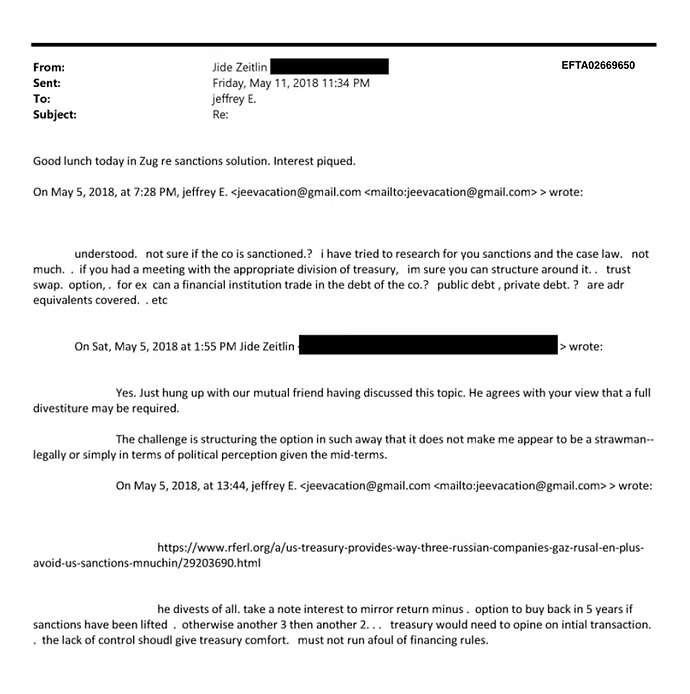
Zeitlin, who worried that he could be seen as a “strawman” following a conversation with “our mutual friend,” reached out to update Epstein a week later: “good lunch today in Zug [Switzerland] re sanctions solution. Interest piqued.”
Epstein first met Zeitlin through Steve Bannon, who had left the White House less than a year beforehand and was still in his post-government employment cooling-off period. Throughout this period, Epstein kept Bannon informed about his conversations with Zeitlin about the sanctions issue.

Ultimately, the DOJ would indict Deripaska in 2022 for a sanctions-evasion scheme that allegedly began in May of 2018, in which, following his designation, Deripaska “conspired with others to evade and to violate those sanctions in various ways and over the course of several years” while serving the Russian state and energy sector. The DOJ brought a civil forfeiture action against some of Deripaska’s US property in late 2024.